
MACAP
MacroAlgae as a Source for Alternative Civil engineering Products
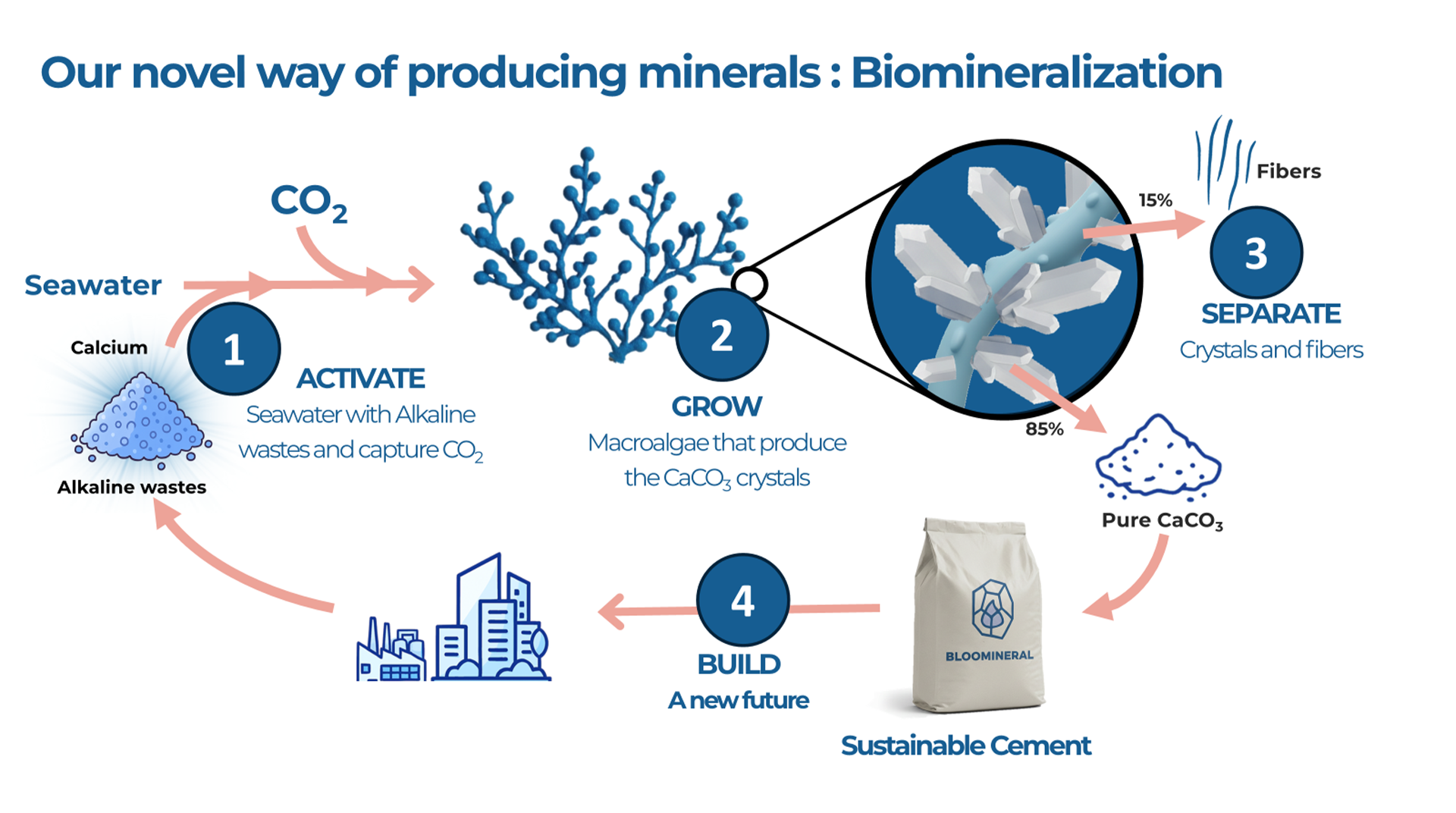
To combat climate change, the National Low-Carbon Strategy (SNBC) provides guidance to reduce greenhouse gas emissions and thus achieve carbon neutrality by 2050. In the construction sector, achieving carbon neutrality will only be possible by reducing clinker production through substitution with new binders, and by capturing residual emissions. The biomineralization process combined with the recycling of industrial mineral waste referred to as “alkaline” makes it possible to accomplish these two tasks simultaneously. These new alternative bio-based materials produced by the startup Bloomineral, are indeed CO₂ capture materials and store it durably, transforming construction materials into carbon sinks. The process is circular, valorizing waste that impacts environmental environments while reducing the use of raw materials. This doctoral project aims at studying the properties of these new materials as supplementary cementitious materials. An optimization of formulations will be explored and recommendations generated with regard to hydration, which conditions the durability of the materials. A detailed understanding of the physicochemical interactions that occur between the biominerals and other components of low-carbon cement will enable us to better assess the competitiveness of the solution, and thus its impact on achieving climate objectives.