
Research axes :
Building Materials
Recycling, Urban Mines and Eco-design
Workshop: Bio-based and geo-based materials: contributions to the energy transition
Event Information
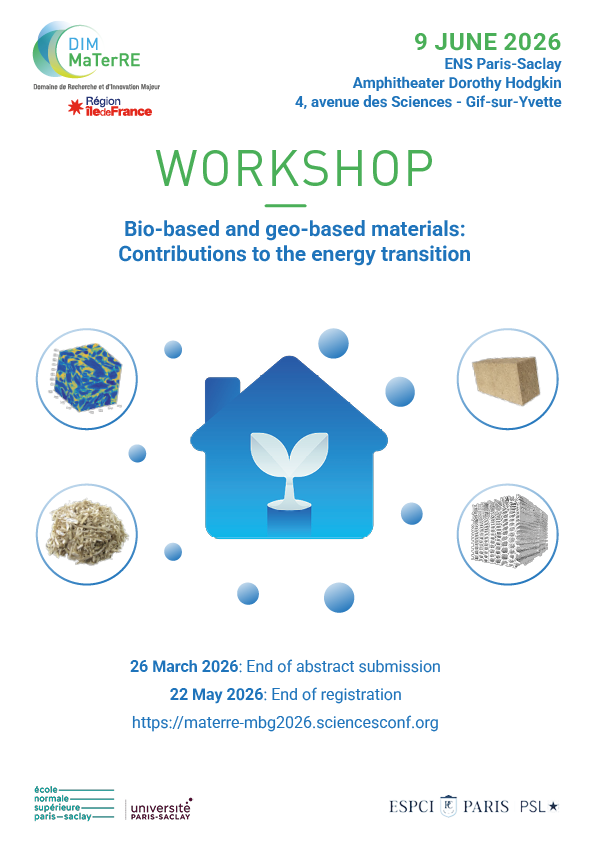
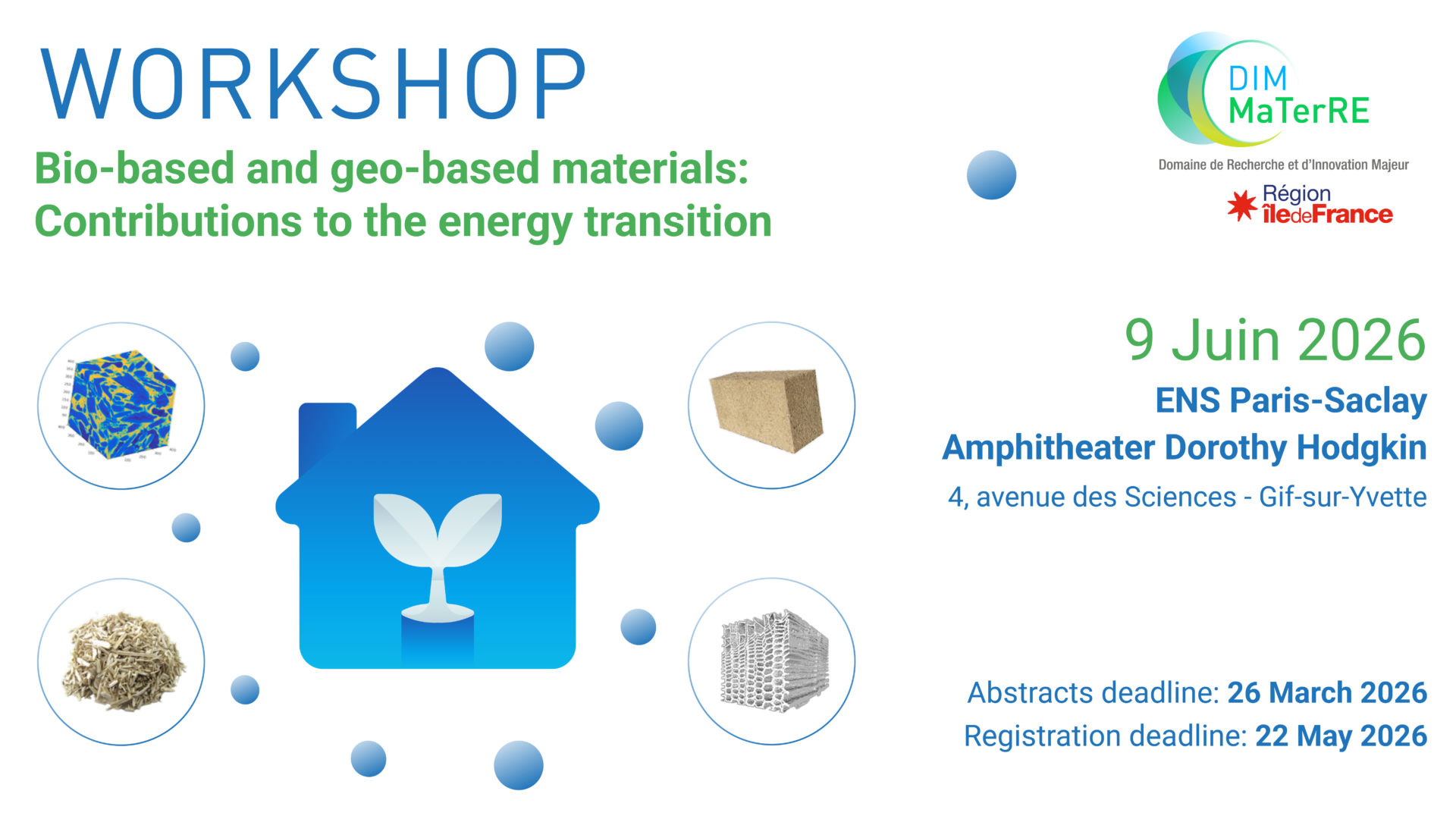
A call for contributions is open until 26 March for this workshop organised by DIM MaTerRE on 9 June 2026 (09:00-18:00) at ENS Paris-Saclay.
Bio-based and geo-based materials, and more broadly eco-materials, derived from renewable or local resources, represent a strategic lever for designing low-carbon systems.
Their potential extends beyond the building sector: these materials are now used in a variety of applications in sustainable mobility, energy storage and conversion, urban and landscape planning, heritage renovation, design and applied arts. Their remarkable properties – biogenic carbon storage capacity, thermal and hygrothermal performance, modularity and compatibility with the circular economy – open up major multidisciplinary prospects for rethinking the design, manufacture and use of material systems.
In this context, this workshop organised by DIM MaTerRE aims to:
- Bring together the scientific, technical and industrial community around the challenges of characterising, modelling and implementing these materials.
- Identify the scientific, technological and regulatory barriers that need to be overcome to promote their deployment.
- Promote interdisciplinary synergies between researchers, engineers, energy experts, industrialists and decision-makers.
- Discuss approaches to environmental assessment, sustainability and the structuring of local and circular sectors.
Organizing Committee :
- Kamilia Abahri: HDR lecturer (Laboratoire de Mécanique Paris-Saclay, ENS Paris-Saclay)
- Laurent Brochard : Senior researcher at Laboratoire Navier (École des Ponts ParisTech, Université Gustave Eiffel, CNRS)
Invited conferences :
MAIN CONFERENCES
Patrick Perré – Bio-based materials for construction: resources, advantages and combination with geo-based materials.
Bio-based materials have many qualities: carbon footprint, thermal insulation, tensile strength, water regulation, thermal inertia through phase change, etc. However, as they are perishable materials, they are more difficult to use than mineral materials. Furthermore, they are produced by ecosystems, which are both solutions to climate change and the first victims of climate change.
After an introduction on current and projected renewable carbon production, the conference will attempt to provide a fairly comprehensive overview of the advantages and disadvantages of bio-based materials and the benefits of combining them with geo-based materials. The aim is to show how these materials can offer solutions to construction challenges, particularly in response to climate change, both in renovation and new construction. Indeed, after talking at length about energy-inefficient buildings, the media are now talking a lot about boilers during heatwaves: our societies have finally realised the need to work on thermal comfort in summer.
Biography: A specialist in wood and bio-based materials and an expert in coupled heat and mass transfer in porous media, Patrick Perré now also works on bioactive systems and biotechnologies, particularly the biodegradation and bio-manufacturing of bio-based materials. Initially a research fellow at the CNRS, then a professor at AgroParisTech Nancy, where he headed an INRAe joint research unit, he joined CentraleSupélec in 2011 to restructure a 70-person laboratory (LGPM) focused on renewable resources. Since 2015, he has headed the CentraleSupélec Chair in Biotechnology. With an annual budget of over €3 million, this group of more than 40 people applies the concept of digital twins to the sustainable production of materials, energy and molecules. Author or co-author of more than 300 articles in peer-reviewed journals (h-factor: WoS = 43, Google Scholar = 56), Patrick Perré has received three international awards and has numerous international collaborations.Les matériaux biosourcés ont de nombreuses qualités : bilan carbone, isolation thermique, résistance à la traction, régulation hydrique, inertie thermique par changement de phase… Matériaux périssables, leur mise en œuvre est cependant plus délicate que les matériaux minéraux. Par ailleurs, ils sont produits par les écosystèmes, à la fois solutions au changement climatique et premières victimes du changement climatique.
Florence Collet – Impact of hygric phenomena on the hygrothermal behaviour of bio-based and geo-sourced materials: from experimentation to modelling
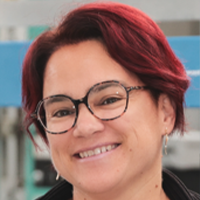
Bio-based and geo-sourced materials are subject to coupled heat and moisture transfer. Experiments conducted at the wall scale, in the laboratory and in situ, highlight the occurrence of hygric sorption-desorption phenomena under the effect of heat flows. These phenomena in turn impact heat flows, thus affecting the wall’s energy balance and user comfort. They are governed by the hygrothermal properties of the materials, which depend on their formulation and implementation. Various characterisation methods are used, including an inverse method recently developed at the LGCGM to identify sorption isotherms and vapour permeability. The hygrothermal response of walls is also simulated, either with commercial software, which provides satisfactory results when using the parameters obtained by identification as input data, or with an internal code that takes into account the complexity of hygric phenomena within bio-based materials: hysteresis phenomena, local sorption kinetics and the coupling of these phenomena.
Biography: Florence Collet is a professor at the University of Rennes – Civil Engineering and Materials Engineering Laboratory (LGCGM). A specialist in bio-based and geo-sourced materials and hygrothermal transfers, Florence Collet has participated in several national and international projects and has been involved in various working groups and technical committees. Her work focuses in particular on:
Assessing the impact of materials on thermal comfort and energy performance
Characterising hygrothermal behaviour from the material scale to the building scale
Developing inverse methods for identifying material properties
Modelling coupled heat and mass phenomena in walls
Philippe Coussot – Hygrothermal behaviour of bio-based building materials: physical approach and application prospects
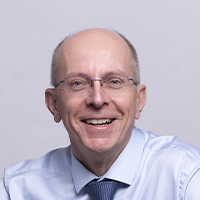
Bio-based building materials (made from wood, hemp, flax, straw, etc.), as well as paper, natural textiles and furs, are good insulators, but also have the unique ability to absorb or release a significant amount of water (up to 30% of their dry mass) from the vapour contained in the ambient air, in the form of molecules distributed (‘bound water’) within the solid elements themselves. As this phase change is associated with high latent heat, the hygrothermal behaviour of these materials is a key issue. We have recently developed a physical approach to moisture transfer, based in particular on NMR relaxometry and MRI, which provide detailed information on the distribution of water in its different phases within this type of material. This ultimately enables us to propose (and validate) a complete model of hygrothermal behaviour, based solely on independently determined physical parameters. However, we will discuss the possibilities and difficulties of using this knowledge in practice to effectively reduce energy consumption in the home, whether through the development of new materials or the control of heating and ventilation.
Biography: A graduate of École Polytechnique (X87) and École Nationale des Ponts et Chaussées, Professor Philippe Coussot is a physicist and specialist in rheology and complex fluid mechanics. His work focuses in particular on threshold fluids, suspensions, flows in porous media and rheometry using magnetic resonance imaging. After starting his career at Cemagref and then at the Laboratoire Central des Ponts et Chaussées, he became a professor at École des Ponts ParisTech, where he heads the ‘Porous Media’ team at the Laboratoire Navier. Author of numerous reference books and scientific publications, he is internationally recognised for his contributions to the physics of complex materials. He has received several major awards, including the CNRS Silver Medal and an ERC Advanced Grant.
Nicolas Vernoux-Thélot – Architectural Approaches to Bio-based and Geo-sourced Materials for Low-Carbon Buildings
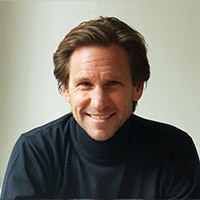
As part of its National Low-Carbon Strategy, France has been committed to drastically reducing its greenhouse gas (GHG) emissions over the past decade. Since the construction sector is among the most polluting, it must increasingly integrate low-carbon materials. Through selected projects and research programs, Nicolas Vernoux-Thélot will demonstrate the benefits of using bio-based and geo-sourced materials, as well as their potential for hybridization with waste resources and for integration into passive and innovative building systems. Case studies will include raw earth, water-based systems, refractory bricks, sargassum, recycled wood, thermosensitive envelopes, and radiation-shielding materials.
Biography: Nicolas Vernoux Thelot holds a Master’s degree in Architecture from Versailles National school of Architecture and a Master’s degree in Humanities and Social Sciences from Paris 8 University. He also trained as a botanist at the National Museum of Natural History in Paris. He founded IN SITU architecture in 2003 and he currently serves as the company’s CEO, leading the studio in developing projects in various sectors. These projects range from hotels and offices to villas, housing and commercial or cultural buildings, in both France and abroad. In 2020, alongside his practice, he launched IN SITU LAB, a research, development and innovation studio focusing on biomimicry and passive systems for low-carbon architecture and urbanism. His work has been published in numerous architecture and scientific journals worldwide. He has been invited to lecture at several institutions including television shows, radio programs and seminars. Nicolas Vernoux Thelot has received multiple awards, including the ‘Public Prize of Paris Contemporary Architectures’, “Europe 40 Under 40 Architects”, ‘Architecture Masterprize’, the ‘International Architecture Award’ and the ‘Green Solutions Award’.Since 2015, he has lectured at several schools: LISAA (department of interior architecture), Sup Bio’Tech school of Engineering (department of innovation), Builders school of Civil Engineering and Ponts ParisTech School of Engineering (postgraduate Master’s program). In 2023, he was a visiting faculty member at the College of Architecture and Environmental Design at CalPoly SLO.
Yassine El Mendili – Microstructure and performance of bio-based and geo-based materials
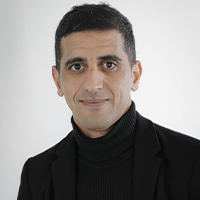
Bio-based and geo-based materials exhibit mechanical and hygrothermal properties that are strongly influenced by their microstructure. I will show how multi-scale porosity, interfaces, and implementation parameters (particle size, compaction, water content, fibers/fillers) simultaneously govern mechanical properties (rigidity, strength, damage) and hygrothermal properties (sorption, vapor/liquid transfer, thermal conductivity). Low-carbon formulation and stabilization approaches will be compared with characterization methods (microstructure and coupled tests) in order to identify optimization levers. The objective is to illustrate how these indicators can guide design to improve the trade-offs between strength, hygrothermal comfort, and durability, while reducing the carbon footprint.
Biography : Yassine EL MENDILI is a professor (Dr.) and head of the “Materials for Sustainable Construction” team at ESTP (Institute for Research in Construction). His work focuses on low-carbon, bio-based, and geo-based construction materials (stabilized raw earth, biocomposites, alternative binders, formulations based on co-products and recycled resources). He develops approaches linking microstructure, hygrothermal transfers, and mechanical performance/durability, combining formulation, implementation, and multi-scale characterizations (XRD, Raman, FTIR, FRX/EDX, sorption/DVS, conductivity, mechanical and electrochemical tests). He leads collaborative academic and industrial projects aimed at decarbonization and circularity of materials. He is also an expert evaluator for the European Commission on devices dedicated to technologies and innovations for low-carbon building materials, including sustainability and CO₂ storage potential.