

PhotoCat
Photoélectrodes Catalytiques pour la Production de Carburants Solaires
Producing hydrocarbons using solar energy is a promising and sustainable approach to CO₂ valorization. One process for synthesizing hydrocarbons, the Fischer–Tropsch process, is a catalytic chemical reaction that converts synthesis gas—a mixture of carbon monoxide (CO) and hydrogen (H₂)—into liquid hydrocarbons. CO and H₂ molecules therefore serve as the building blocks for this reaction, as they do in many other processes for synthesizing high-value-added chemicals. Solar-driven conversion of CO₂ into CO, combined with water reduction to produce hydrogen, thus offers a strategy for energy storage and the production of key chemical feedstocks for industry, paving the way toward a low-carbon economy.
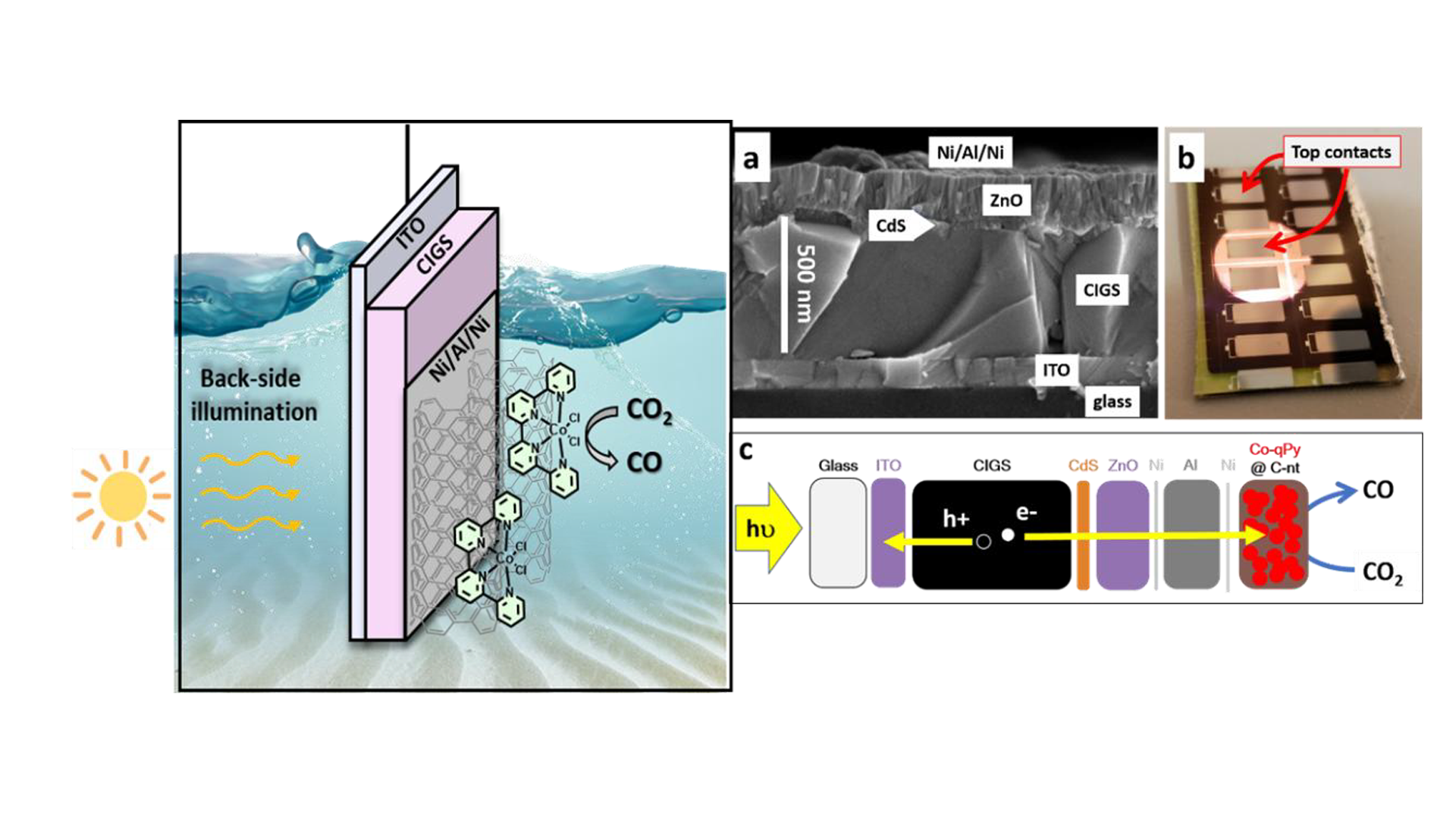
We have recently developed a photoelectrochemical (PEC) conversion device capable of reducing CO₂ to CO.
The first objective of the PhotoCat project is to optimize the photocathode structure of the photoelectrochemical conversion device to improve its performance and operational lifetime while minimizing manufacturing costs through reductions in both material and process costs. The second objective is to generate comprehensive, measurable data, including calibration and reproducibility assessments, to evaluate the viability of this innovative device.
